Emplacing and Excavating the City: Art, Ecology, and Public Space in New Delhi
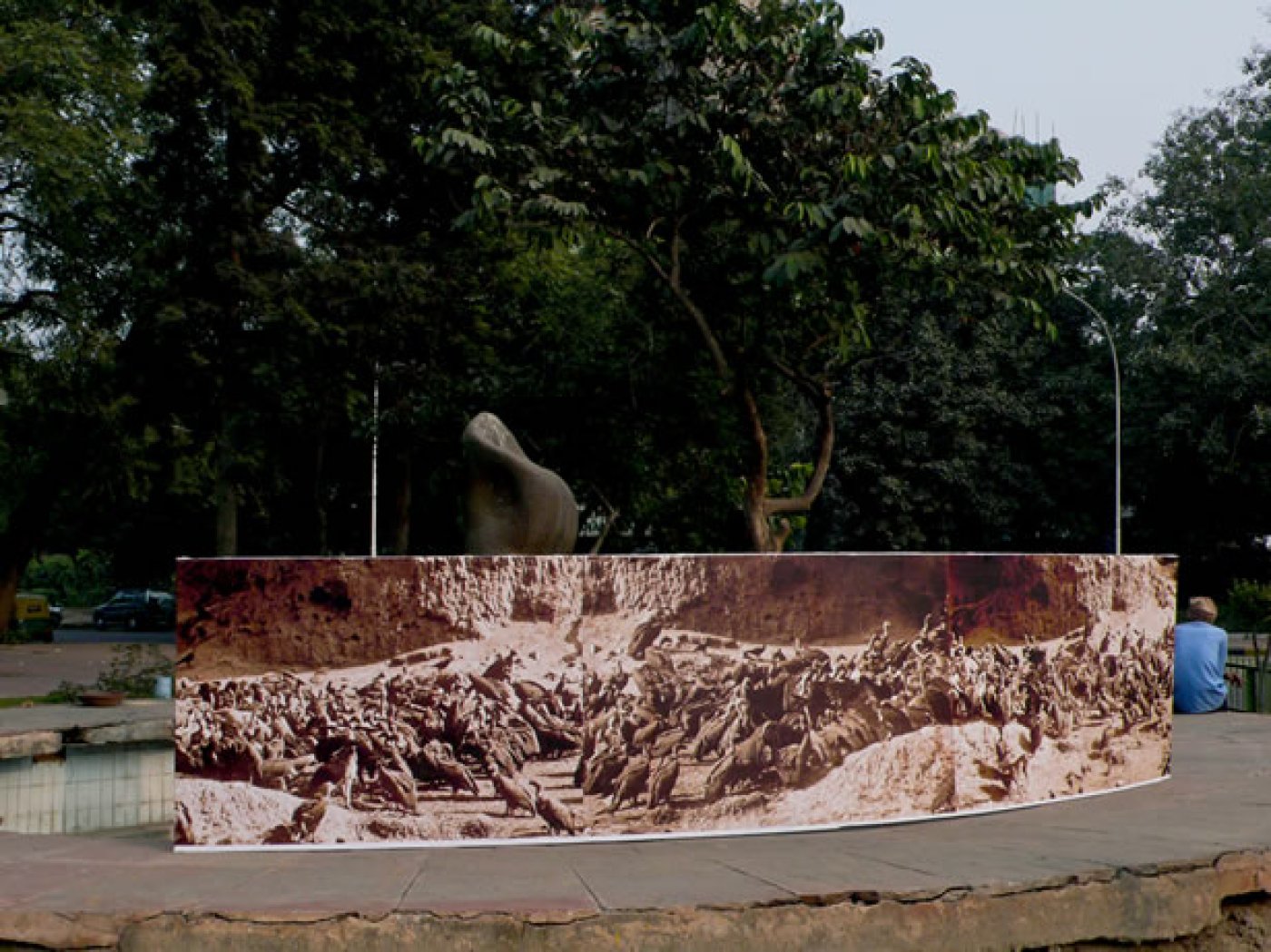
An interesting case study for the exploration of how government institutions today regulate space and thus to some extent the imaginaries of national identity, is Ravi Agarwal’s work Extinct. Over the past ten years the artist, originally from New Delhi, has made the interesting transition from environmental activist and documentary photographer to artist and, of late, curator. He has worked with art installations that address issues such as declining industries and labour conditions in the context of high capitalism as well as pollution and farming, often with a focus on the river Yamuna. His own work has been exhibited abroad, for instance at documenta 11 (2002), curated by Okwui Enwezor, or in the travelling exhibition Indian Highway (Bublatzky 2011). Agarwal’s work for 48°C was research based and dealt with Delhi’s last three remaining vultures—stuffed and preserved in a diorama in the Natural History Museum near Connaught Place.